About 100 minutes
Expedition to Pluto — Background and Themes
Space Future
22,796 recorded words. 7 minutes difference from this book's estimate.
View Gutenberg source #61694
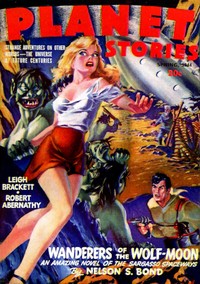
The Jewel of Bas — Key Ideas to Explore can be approached with a clearer sense of reading commitment from its source measurements: 21,299 words, 1 hr 33 min estimated reading time, and 2 detected text sections.
The text analysis averages about 12.0 words per sentence, while the detected sections provide another way to judge how the source is divided.
Project Gutenberg metadata also associates the work with “Science fiction,” connecting these edition facts with the source record’s subject description.
Explore this collection
These alternatives are selected using recorded categories and estimated reading time.
About 100 minutes
Space Future
22,796 recorded words. 7 minutes difference from this book's estimate.
View Gutenberg source #61694About 101 minutes
Space Future
23,034 recorded words. 8 minutes difference from this book's estimate.
View Gutenberg source #61805About 85 minutes
Space Future
19,422 recorded words. 8 minutes difference from this book's estimate.
View Gutenberg source #61810Search stored excerpts and compare books → Choose by your preferences →
Choices use stored catalog measurements. Estimates vary with reading speed. A shared category is a catalog label, not a claim that two books have the same argument or literary quality.
Search reads excerpt text stored with this catalog and links to its associated Gutenberg record. The connection is stored in the site database; this tool does not recheck that every excerpt is word-for-word identical to that external record. Excerpt search does not cover every chapter and does not verify historical publication dates.
Catalog snapshot checked: 2026-09-25. Coverage: 99 public books, 99 available source excerpts.
Read the complete public-domain text at its original source.
Read on Project GutenbergLeigh Brackett opens The Jewel of Bas with a stew, a quarrel, and a thrown plate. The first scene establishes the central pair—Ciaran, a scarred, lazy harpist with a missing tooth, and Mouse, a branded thief with a temper—through action and banter rather than exposition. Their camp on a tongue of land above the Forbidden Plains immediately signals the story's geography: a reddish sky, a sullen sea in fog, and a distant golden peak called Ben Beatha, the Mountain of Life. Brackett's prose is tactile and economical, favoring concrete details—"small iron pot," "ragged crimson tunic," "shivering chord from the harp"—over abstract description. The dialogue carries the weight of character, with Mouse's sharp tongue and Ciaran's lazy grin revealing their dynamic without authorial intrusion.
Brackett builds her setting through carefully chosen nouns and verbs that imply decay and harshness. The sea is "sullen and burning," the plains "flat, desolate, and barren." The sky is "reddish," the sunballs "floated always, lazy." These adjectives do not merely decorate; they create a consistent atmosphere of stagnation and threat. The world feels old and used, its colors drained to reds and greys. Even the stew is thin. The author avoids romanticizing the landscape; instead, she makes it feel like an obstacle that shapes the characters' lives. The Phrygian hills, Atlantea, the Forbidden Plains—these names evoke myth without overwhelming the narrative. Brackett trusts the reader to absorb the setting through action and sensory detail rather than through paragraphs of background.
The dialogue between Ciaran and Mouse is the engine of the early chapters. Their exchanges are terse, often sarcastic, and punctuated by physical violence—thrown plates and ladles. Mouse's speech is sullen and defensive: "You could have stolen a bigger joint." Ciaran's replies are laconic and teasing: "It's just as well. I don't want you getting fat and lazy." Brackett uses these verbal sparring matches to reveal class tension (Mouse's thief brand, her sensitivity about her thinness) and mutual dependence. The rhythm of their conflict—accusation, retort, thrown object—creates a pattern that feels both natural and stylized. Later, when Ciaran speaks to the hunter, his tone shifts to urgent and direct: "If you want to kill a snake, what do you do?" The change in register marks his transition from idle musician to determined actor.
Brackett describes characters through their physicality and their reactions to the environment. Ciaran is introduced through his "lazy grey eyes," his scarred lip, his missing tooth, and his habit of stroking his harp. Mouse is "as thin as a young girl," with wild black hair and a red brand between her eyes. These details are not merely visual; they carry narrative weight. The brand marks her as a thief, a social outcast. Ciaran's scar and missing tooth suggest a violent past. The author also uses gesture to convey emotion: Mouse throws things when angry; Ciaran "grinned" and "relaxed" when provoked. The hunter, introduced later, is defined by his hands: "I believe in my hands. They're all I know." This line encapsulates his pragmatic, physical worldview. Brackett's descriptions are never static; they are always in service of action or character revelation.
The narrative is structured around interruptions that escalate tension. The opening camp scene is interrupted by Mouse's question about Ben Beatha. Later, the tunnel sequence is interrupted by the hermit's scream: "Evil! You are evil to defy The Light." This sudden intrusion of a fanatical voice shifts the scene from stealth to chaos. Brackett uses these interruptions to break the rhythm of the story and force characters into reactive mode. The hermit's appearance is particularly effective because it subverts expectations: he had previously called the Kalds demons, but now he defends them. This inconsistency hints at a larger, unstable belief system. The fight that follows is rendered in a blur of sensory fragments—"grey bodies leaping," "jewel-tips flashing," "a confused rush of running feet"—mirroring Ciaran's disorientation. The structure thus mirrors the characters' lack of control over events.
Readers should pay attention to how Brackett uses physical objects—the harp, the stew pot, the wands, the finger bones—as anchors for character and plot. These items are never merely props; they carry emotional and symbolic weight. The harp, for instance, is both a comfort and a tool of Ciaran's identity. The wands are weapons but also instruments of control. By tracking these objects, one can trace the story's thematic concerns with power, survival, and artistry. The excerpts suggest a lean, fast-moving narrative that rewards close attention to its crafted surfaces.
I keep thinking about Ciaran and Mouse crossing that rusted world, their hunger for something beyond survival. It reminded me of another old tale, one where the void itself felt like a character, whispering through the stars. There’s a quiet ache in both, a longing for gods who might not answer. I found myself holding that feeling close. Gods of Space — Inside the Classic sits beside it well, like two stones worn smooth by the same ocean.
Build a private reading journal entry for this title.