About 39 minutes
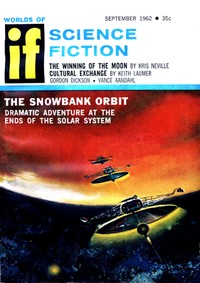
The Snowbank Orbit — Inside the Classic
Space Future
8,919 recorded words. 1 minutes difference from this book's estimate.
View Gutenberg source #61243
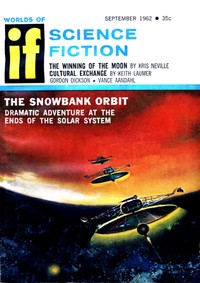
Before opening The Winning of the Moon — Inside the Classic, the edition data offers a quick orientation: 9,023 words, 40 min estimated reading time, and 2 detected text sections.
The text analysis averages about 10.6 words per sentence, while the detected sections provide another way to judge how the source is divided.
Project Gutenberg metadata also associates the work with “Science fiction,” connecting these edition facts with the source record’s subject description.
Explore this collection
These alternatives are selected using recorded categories and estimated reading time.
About 39 minutes
Space Future
8,919 recorded words. 1 minutes difference from this book's estimate.
View Gutenberg source #61243About 41 minutes
Space Future
9,404 recorded words. 1 minutes difference from this book's estimate.
View Gutenberg source #61467About 39 minutes
Space Future
8,957 recorded words. 1 minutes difference from this book's estimate.
View Gutenberg source #61798Search stored excerpts and compare books → Choose by your preferences →
Choices use stored catalog measurements. Estimates vary with reading speed. A shared category is a catalog label, not a claim that two books have the same argument or literary quality.
Search reads excerpt text stored with this catalog and links to its associated Gutenberg record. The connection is stored in the site database; this tool does not recheck that every excerpt is word-for-word identical to that external record. Excerpt search does not cover every chapter and does not verify historical publication dates.
Catalog snapshot checked: 2026-09-25. Coverage: 99 public books, 99 available source excerpts.
Read the complete public-domain text at its original source.
Read on Project GutenbergThe story opens with four American astronauts waiting outside their dome for a Soviet underground blast, unable to get a clear countdown from the Russian operator Pinov, who only repeats "Boom!" The humor of the language barrier quickly gives way to a more pressing danger: a drum of epoxy resin, mixed on Soviet orders, begins to overheat. The narrative, published in 1962, uses the Cold War setting not for political drama but as a backdrop for a technical failure that the characters must diagnose in real time.
The opening dialogue between Major Winship and Pinov establishes a pattern of failed communication that recurs throughout the story. Winship's limited Russian—"Nyet" and "Boom!"—forces him to rely on a single, unreliable channel. This is not a political allegory but a practical problem: the Americans cannot get the information they need to stay safe. The author uses this to create tension without any direct conflict between the two sides. Later, when the epoxy crisis unfolds, the characters must rely on their own knowledge, which proves incomplete. The story thus treats the Cold War as a given condition, not a theme to be explored.
The central incident—a 500-pound drum of epoxy resin curing uncontrollably—is described with precise physical detail. Captain Wilkins explains the chemistry: the resin liberates heat as it cures, and in the vacuum of the moon, it cannot radiate that heat away, leading to a runaway reaction. The drum glows cherry red, melts, and eventually explodes, destroying the dome's air supply. The scene is built around the characters' delayed realization of the danger, their clumsy escape through the airlock, and their subsequent analysis. The author avoids melodrama, focusing instead on the logical progression of the failure. The explosion itself is silent, described as a "great, silent tongue of flame"—a detail that underscores the lunar setting.
After the explosion, the four astronauts are stranded outside the dome, their air supply gone. The story does not offer a heroic rescue or a last-minute solution. Instead, the characters are left to wait and assess their situation. Major Winship curses mechanically; Captain Lawler tries to rationalize the Soviet general's motives; Lieutenant Chandler states the obvious: "We got T-Trouble." The narrative tone remains understated, even flat, which contrasts with the life-threatening stakes. The excerpt ends before any resolution, leaving the reader with the same uncertainty the characters face. This refusal to provide a neat conclusion is consistent with the story's focus on process over outcome.
The catalog subjects list "Cold War" and "Survival" as key themes, but the excerpts show a story more interested in the mechanics of a technical failure than in political or survival drama. Readers should approach the text as a problem-solving narrative, where the real antagonist is not the Soviet Union but the physics of epoxy curing. The incomplete excerpts leave the final fate of the characters unknown, but the story's value lies in its detailed, almost clinical depiction of a crisis born from everyday materials.
I think of Neville’s moon base epoxy—how a small, misunderstood action curdles into disaster—whenever I return to that other lunar study. Tom’s error was purely technical, but the ache of it is human. The older I get, the more I value that quiet ache over any plot summary. Goddess of the Moon — Inside the Classic holds the same tender, unglamorous truth.
Save your reaction, strongest insight, and memorable passage.