About 42 minutes
Satellite of Fear — Story, Setting & Ideas
Space Future
9,523 recorded words. 2 minutes difference from this book's estimate.
View Gutenberg source #61869
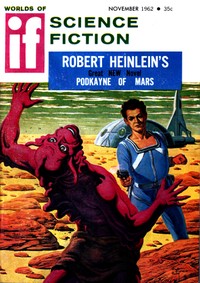
This digital edition of The Desert and the Stars — Story, Setting & Ideas is described by source-level measurements including 10,076 words, 44 min estimated reading time, and 2 detected text sections.
The text analysis averages about 13.0 words per sentence, while the detected sections provide another way to judge how the source is divided.
Project Gutenberg metadata also associates the work with “Science fiction,” connecting these edition facts with the source record’s subject description.
Explore this collection
These alternatives are selected using recorded categories and estimated reading time.
About 42 minutes
Space Future
9,523 recorded words. 2 minutes difference from this book's estimate.
View Gutenberg source #61869About 46 minutes
Space Future
10,554 recorded words. 2 minutes difference from this book's estimate.
View Gutenberg source #62085About 42 minutes
Space Future
9,509 recorded words. 2 minutes difference from this book's estimate.
View Gutenberg source #63605Search stored excerpts and compare books → Choose by your preferences →
Choices use stored catalog measurements. Estimates vary with reading speed. A shared category is a catalog label, not a claim that two books have the same argument or literary quality.
Search reads excerpt text stored with this catalog and links to its associated Gutenberg record. The connection is stored in the site database; this tool does not recheck that every excerpt is word-for-word identical to that external record. Excerpt search does not cover every chapter and does not verify historical publication dates.
Catalog snapshot checked: 2026-09-25. Coverage: 99 public books, 99 available source excerpts.
Read the complete public-domain text at its original source.
Read on Project GutenbergThe story opens not on a desert world but in a bureaucratic office, where Under-Secretary Sternwheeler questions Retief's decision to personally deliver a message. This initial scene establishes the Corps' preference for paperwork over action—a tension that drives the plot. Retief's dry humor ('I had a sharp attack of writer's cramp') immediately sets him apart from his superiors, who are more concerned with fiscal years and reports than the Aga Kagans' land-grabbing on Flamme.
The narrative then shifts to the desert palace of the Aga Kaga, where the setting becomes a stage for verbal and physical combat. The contrast between the sterile Corps office and the opulent, dangerous palace highlights the story's central conflict: the clash between diplomatic protocol and direct action.
The opening dialogue reveals a Corps hierarchy that values procedure over substance. Sternwheeler's vague language ('what shall I say...?') and Magnan's sycophantic agreement ('We certainly appreciate your guidance') contrast sharply with Retief's bluntness. Retief's report of the Aga Kagans' 'armored trawlers mounting 40 mm infinite repeaters' and 'homesteaders' with rocket launchers is met with evasion, not action. This structural pattern—Retief presenting hard facts, his superiors deflecting—recurs throughout the excerpts, underscoring the Corps' historical pattern of abandoning settlers, as Retief notes: 'Sixty years ago the Corps was encouraging the Boyars to settle Flamme... They were assured of Corps support.' The story thus uses the office setting to critique diplomatic inertia.
The Aga Kaga's palace is described through sensory details: 'fruit and silken cushions,' 'grizzly in satin robes,' and the potentate's threat to 'broil a diplomat over a slow fire.' This setting amplifies the physicality of the conflict. The fight scene—punches, grapples, a bitten foot—is choreographed with specific moves: 'feinted with his left and planted a short right,' 'groped for a scissors hold.' The Aga Kaga's dialogue mixes menace with theatricality ('by all the houris in Paradise!'), while Retief counters with deadpan retorts ('I've seen it done often at staff meetings'). The palace is not just a backdrop but an active element: the Aga Kaga's confidence in his 'private' council is shattered when Retief and Georges attack, showing that the setting's security is an illusion.
Throughout the excerpts, the terraformed world Flamme is described in terms of human effort: 'cleared jungle, descummed the seas, irrigated deserts, set out forests.' This litany of labor contrasts with the Aga Kaga's predatory expansion. Retief's argument hinges on the Boyars' investment: 'They've just about reached the point where they can begin to enjoy it.' The Aga Kaga, in turn, invokes historical analogies (Hitler, Stalin, Leung) to justify his actions, framing the conflict as a cycle of civilization-building and withdrawal. The image of 'goat-herding land-thieves' versus 'muck-grubbers' reduces the dispute to a clash of stereotypes, but the story's structure—moving from office to palace—keeps the focus on the tangible stakes: who controls the land.
The Aga Kaga's monologue about 'spiritual forebears' and 'the heaping of ashes of self-accusation' is a key moment of rhetorical escalation. He uses historical examples to argue that the Corps will inevitably withdraw, leaving 'spoils for local political opportunists.' Retief counters with a threat: 'neck-wringing seems more in order than hand-wringing.' This exchange is the story's intellectual core, where the conflict is framed not as a simple good-versus-evil but as a pattern of imperial overreach and retreat. The Aga Kaga's reference to 'medieval code of chivalry' and Retief's mockery of his 'fancy hair-do' show how the dialogue shifts between high rhetoric and low comedy, a technique that keeps the tone unpredictable.
Readers should pay attention to how Laumer uses physical action to resolve what dialogue cannot. The fight scene is not just a climax but a logical extension of the verbal sparring: the Aga Kaga's bite and Retief's haymaker mirror the earlier exchange of historical analogies. The story's brevity (under 11,000 words) means every scene serves double duty, advancing both plot and theme. Watch for the way the desert setting—mentioned in the title but only briefly described—functions as a symbol of the contested land, a prize that remains offstage but drives every character's motivation.
That rainy afternoon, I kept returning to Retief’s stubborn refusal in The Desert and the Stars, his quiet push against the Aga Kaga’s grand plans. It made me think about how diplomacy so often fails for lack of nerve. Later, browsing, I stumbled onto Space-Wolf — Themes and Context, and found the same ache beneath different stars, another creature trapped by circumstance.
Build a private reading journal entry for this title.