About 38 minutes
Mutiny in the Void — Edition Insights
Space Future
8,580 recorded words. 0 minutes difference from this book's estimate.
View Gutenberg source #62350
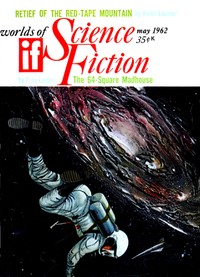
For Retief of the Red-Tape Mountain — Inside the Classic, the stored edition analysis reports 8,559 words, 38 min estimated reading time, and 1 detected text section.
The text analysis averages about 12.3 words per sentence, while the detected sections provide another way to judge how the source is divided.
Project Gutenberg metadata also associates the work with “Science fiction,” connecting these edition facts with the source record’s subject description.
Explore this collection
These alternatives are selected using recorded categories and estimated reading time.
About 38 minutes
Space Future
8,580 recorded words. 0 minutes difference from this book's estimate.
View Gutenberg source #62350About 39 minutes
Space Future
8,919 recorded words. 1 minutes difference from this book's estimate.
View Gutenberg source #61243About 39 minutes
Space Future
8,957 recorded words. 1 minutes difference from this book's estimate.
View Gutenberg source #61798Search stored excerpts and compare books → Choose by your preferences →
Choices use stored catalog measurements. Estimates vary with reading speed. A shared category is a catalog label, not a claim that two books have the same argument or literary quality.
Search reads excerpt text stored with this catalog and links to its associated Gutenberg record. The connection is stored in the site database; this tool does not recheck that every excerpt is word-for-word identical to that external record. Excerpt search does not cover every chapter and does not verify historical publication dates.
Catalog snapshot checked: 2026-09-25. Coverage: 99 public books, 99 available source excerpts.
Read the complete public-domain text at its original source.
Read on Project GutenbergThe story opens with Consul Passwyn lamenting his assignment to a backwater system, complaining to Vice-Consul Retief about the settlers on eight worlds. Passwyn hands Retief sealed orders for the planet Adobe, where a crisis with the native Jaq has escalated. Retief questions the orders' basis—no one from Sector has visited Adobe—but is told to implement them without deviation. The tension between rigid procedure and on-the-ground reality is established immediately.
The narrative hinges on the concept of sealed orders, a physical buff envelope that Retief is instructed not to open until a specific moment. Passwyn insists the approach has been 'worked out in detail at Sector,' yet admits no one there has visited Adobe. This gap between remote planning and local conditions is a recurring motif. Retief's quiet skepticism—'Has anyone at Headquarters ever visited Adobe?'—contrasts with Passwyn's faith in protocol. The orders become a symbol of bureaucratic inertia, their contents unknown to the reader until late in the story.
Adobe is described as a world of 'endless deserts' with only a few oases. The native Jaq are initially presented as a problem to be managed, but Retief's interactions reveal a complex society. The mail pilot, a 'leathery veteran with quarter-inch whiskers,' spits and leans, grounding the story in a gritty, lived-in feel. Later, Retief meets the Flap-jack Hoshick, whose translator and 'fringe tentacles' suggest a non-humanoid physiology. The setting shifts from the consul's office to starlit sand, emphasizing movement between enclosed bureaucratic spaces and open alien terrain.
Retief negotiates with Hoshick by proposing a radical change to traditional conflict: instead of using 'skirmishforms' (proxy fighters), the two representatives will fight personally. Hoshick is initially baffled—'What possible significance could one attach to the activities of a couple of random skirmishforms?'—but warms to the novelty. The duel itself is described in visceral detail: Retief uses 'Tennessee rules' allowing biting, gouging, and stomping. He exploits the alien's anatomy, probing a ventral orifice and finding handholds, turning the fight into a physical puzzle. The scene balances humor with genuine tension.
Laumer's dialogue carries the satire. Passwyn's pompous complaints—'I hate travel'—are undercut by his quick recovery: 'Not that a bit of travel isn't an excellent thing for a junior officer.' Hoshick's formal phrasing—'Hoshick of the Mosaic of the Two Dawns'—and his shock at abandoning honor create comic contrast with Retief's pragmatic proposals. The translator device allows for smooth communication while highlighting cultural differences. Retief's own voice is dry and direct, rarely rising to anger, which makes his physical confrontation with Hoshick all the more striking.
Readers should pay attention to how Retief's actions subvert the sealed orders he carries. The story rewards close observation of its physical details—the weight of a buff envelope, the texture of alien hide, the sting of wine spray. Laumer builds a world where diplomatic language masks brute force, and where the most effective negotiation may happen outside the conference room, on starlit sand.
The rain drummed on the windows while Retief’s duel played out on Adobe, and I found myself thinking about how all his careful plans dissolved into something simpler. That afternoon, the same mood carried me toward a stranger desert. Pied Piper of Mars — Context and Discussion sat unopened on the shelf, its red spine catching the grey light, and I finally pulled it down.
Build a private reading journal entry for this title.