About 41 minutes
The Castaway — Key Ideas to Explore
Space Future
9,349 recorded words. 0 minutes difference from this book's estimate.
View Gutenberg source #61842
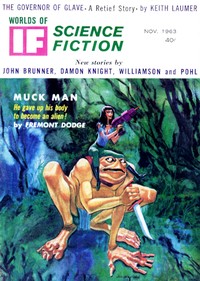
The catalog record for Muck Man — Text and Context provides practical reading context through 9,404 words, 41 min estimated reading time, and 1 detected text section.
The text analysis averages about 15.0 words per sentence, while the detected sections provide another way to judge how the source is divided.
Project Gutenberg metadata also associates the work with “Science fiction,” connecting these edition facts with the source record’s subject description.
Explore this collection
These alternatives are selected using recorded categories and estimated reading time.
About 41 minutes
Space Future
9,349 recorded words. 0 minutes difference from this book's estimate.
View Gutenberg source #61842About 40 minutes
Space Future
9,023 recorded words. 1 minutes difference from this book's estimate.
View Gutenberg source #61242About 42 minutes
Space Future
9,523 recorded words. 1 minutes difference from this book's estimate.
View Gutenberg source #61869Search stored excerpts and compare books → Choose by your preferences →
Choices use stored catalog measurements. Estimates vary with reading speed. A shared category is a catalog label, not a claim that two books have the same argument or literary quality.
Search reads excerpt text stored with this catalog and links to its associated Gutenberg record. The connection is stored in the site database; this tool does not recheck that every excerpt is word-for-word identical to that external record. Excerpt search does not cover every chapter and does not verify historical publication dates.
Catalog snapshot checked: 2026-09-25. Coverage: 99 public books, 99 available source excerpts.
Read the complete public-domain text at its original source.
Read on Project GutenbergThe story opens in a courtroom, where Asa Graybar is convicted of grand theft, framed by a corporate rival. His sentence is not prison but a choice: five years of rehabilitation or one year as a 'changeling' on Jordan's Planet, a world of muck and predatory Sliders. The narrative immediately establishes a tension between human biology and alien environment, as Asa opts for physical transformation to pursue his research on Slider eggs. The prose is lean, focusing on practical decisions and the weight of corporate power, embodied by the Hazeltyne company and its manager Tom Dorr.
The story is divided into titled sections (I, II, etc.), each advancing the plot through a sequence of scenes that alternate between Asa's confinement and his adaptation to Jordan's Planet. The opening section moves from courtroom to cell to conversion tank, establishing the legal and biological stakes. Later sections shift to the muck fields, where Asa's new body—amphibious, with webbed hands and feet—becomes a tool for survival. The structure mirrors the transformation: each section peels away another layer of Asa's humanity, replacing it with the physical and social reality of the muck man's life.
The muck is not just a setting but a constant presence, described in tactile terms: 'the mud held it with a suction of its own.' Asa's conversion is described clinically—'regeneration of damaged or deficient organs'—but the narrative dwells on the physical aftermath: webbed hands, altered lungs, a body suited for 'wretched' conditions. The Slider egg, a 'glittering' object in Harriet's hair, recurs as a symbol of value and danger. The imagery of sinking, suction, and transformation reinforces the theme of irreversible change, both biological and social.
The story moves between enclosed spaces—courtroom, cell, helicopter cabin—and the open, hazardous muck. Asa's first act after conversion is to step into the muck, a deliberate crossing from human society to alien wilderness. The helicopter crash strands him and Harriet in the muck, forcing a shift from corporate power struggles to immediate survival. The radio becomes a tool for reasserting authority, but static cuts off communication, isolating them. This oscillation between control and vulnerability drives the narrative, with each movement into the muck deepening Asa's commitment to his new role.
Dialogue is terse and functional, revealing character through action rather than introspection. Asa's cellmate Jumpy speaks in clipped advice: 'Take the five.' Harriet's voice shifts from formal to pragmatic: 'We fight off the Sliders, then.' Asa's radio commands—'Calling all muck men'—assert leadership. The prose avoids emotional exposition, letting dialogue carry the weight of decisions. The contrast between Dorr's cold authority and the muck men's solidarity ('Muck men stick together') is drawn through brief exchanges, not authorial commentary.
Readers should attend to the way the story uses physical transformation as a lens for examining power and survival. The muck is both a literal environment and a metaphor for the compromises required to exist within a corporate system. The narrative's brevity—under 10,000 words—means every scene serves multiple purposes: advancing plot, developing character, and reinforcing the story's central tension between human identity and alien adaptation.
I kept thinking about Asa Graybar’s quiet, grimy endurance on Jordan’s Planet, how the muck itself became a kind of teacher. It reminded me, strangely, of the patience woven through Gods of Space — Inside the Classic — that same slow fading of the human shape, leaving only a need to understand. Both left me feeling smaller, and oddly comforted by that.
Create a short personal record of your experience with this book.