About 93 minutes
The Jewel of Bas — Key Ideas to Explore
Space Future
21,299 recorded words. 8 minutes difference from this book's estimate.
View Gutenberg source #62996
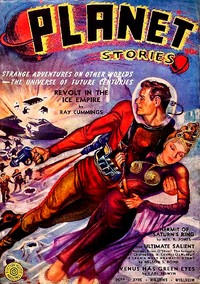
The source record for Revolt in the Ice Empire — Themes and Context measures this digital text at 19,422 words, 1 hr 25 min estimated reading time, and 2 detected text sections.
The text analysis averages about 13.6 words per sentence, while the detected sections provide another way to judge how the source is divided.
Project Gutenberg metadata also associates the work with “Science fiction,” connecting these edition facts with the source record’s subject description.
Explore this collection
These alternatives are selected using recorded categories and estimated reading time.
About 93 minutes
Space Future
21,299 recorded words. 8 minutes difference from this book's estimate.
View Gutenberg source #62996About 75 minutes
Space Future
17,126 recorded words. 10 minutes difference from this book's estimate.
View Gutenberg source #62321About 74 minutes
Space Future
16,817 recorded words. 11 minutes difference from this book's estimate.
View Gutenberg source #63432Search stored excerpts and compare books → Choose by your preferences →
Choices use stored catalog measurements. Estimates vary with reading speed. A shared category is a catalog label, not a claim that two books have the same argument or literary quality.
Search reads excerpt text stored with this catalog and links to its associated Gutenberg record. The connection is stored in the site database; this tool does not recheck that every excerpt is word-for-word identical to that external record. Excerpt search does not cover every chapter and does not verify historical publication dates.
Catalog snapshot checked: 2026-09-25. Coverage: 99 public books, 99 available source excerpts.
Read the complete public-domain text at its original source.
Read on Project GutenbergThe narrator, John, opens by directly challenging the "Official Chronolograph" and its portrayal of Zura as a model world. He insists that human nature—love, hate, honesty, dishonesty—would prevent any true utopia, even on an asteroid. This skeptical framing, combined with his admission that the story is "a love story," sets a distinctive tone that blends personal memoir with political commentary.
The excerpts show the narrator as a captive of both Earthmen (Carruthers, Duroh, Alan) and the white-skinned Zurians. The Zurians are described with precise physical details: hairless, poreless skin like "polished marble," no eyelids, and large purple-black pupils. Their protective coloration makes them nearly invisible in the snowy landscape, a detail that underscores the alien environment.
The narrator’s voice is opinionated and self-aware. He dismisses the official records as erroneous and declares himself qualified to correct them because he and Tara are the "sole survivors." This claim of authority is undercut by his admission that he is "no philosopher," yet he proceeds to critique social crusaders who exploit the ignorant. The excerpts do not reveal whether his skepticism is justified, but the framing suggests the story will test his convictions.
His language is colloquial and direct: "that is the bunk." He addresses the reader as "you" and uses phrases like "I must have my say." This personal, almost confrontational style distinguishes the narrative from a detached scientific report.
The Zurians are depicted through sensory details: their small white forms, huge bare feet, and "jabbering" voices. The narrator notes their "protective coloration" and the way their skin wrinkles when they grimace. Their eyes are described as "huge round white eyeballs, with a very big purple-black lens." The encounter emphasizes their intelligence and restraint—they do not immediately harm the captives.
The setting shifts from a snowy cliff to a luminous tunnel with an "opalescent sheen" and glittering moisture. This environment is integral to the Zurians' world, but the excerpts do not explain its origin or purpose. The narrator’s observation that the Zurians are "human" despite their appearance reinforces the story’s theme of shared humanity.
The narrator is initially held by three other Earthmen: Carruthers, Duroh, and Alan. Their relationship is tense; the narrator describes them as "murderous cut-throats" who would have killed him. Yet when captured by the Zurians, the group briefly unites against the common alien threat. The narrator notes that Carruthers and Duroh are "cowards at heart," terrified despite their earlier aggression.
This dynamic suggests shifting loyalties and moral ambiguity. The narrator’s concern that Duroh might panic and provoke the Zurians shows his pragmatic leadership. The excerpts do not reveal the outcome of this alliance or the fate of the other Earthmen.
The excerpts offer a vivid but incomplete picture of Revolt in the Ice Empire. Readers should note that the narrator’s claim to be a "sole survivor" and his critique of utopian ideals may color the entire account. The detailed descriptions of Zurian physiology and the luminous cave suggest a carefully imagined alien world, but the story’s resolution—and whether it fulfills its promise as a love story—remains unknown from these passages alone.
I often think of that narrator adrift between factions, how his recorded truth felt colder than the ice itself. It reminds me of another volume, The Frozen Planet — Background and Themes, where the chill seems to hold its own quiet secrets. Both whisper that what we’re told isn’t all there is to find.
Capture what you thought, learned, and would like to remember.