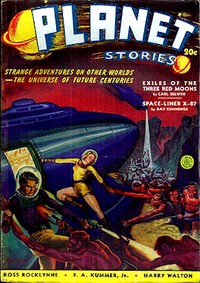
About 74 minutes
Colony of the Unfit — Context and Discussion
Space Future
16,817 recorded words. 1 minutes difference from this book's estimate.
View Gutenberg source #63432
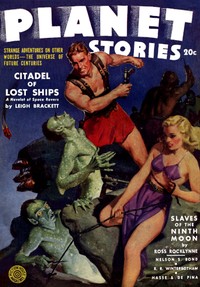
This digital edition of The Flame Breathers — Text and Context is described by source-level measurements including 17,126 words, 1 hr 15 min estimated reading time, and 2 detected text sections.
The text analysis averages about 13.8 words per sentence, while the detected sections provide another way to judge how the source is divided.
Project Gutenberg metadata also associates the work with “Science fiction,” connecting these edition facts with the source record’s subject description.
Explore this collection
These alternatives are selected using recorded categories and estimated reading time.
About 74 minutes
Space Future
16,817 recorded words. 1 minutes difference from this book's estimate.
View Gutenberg source #63432About 70 minutes
Space Future
15,960 recorded words. 5 minutes difference from this book's estimate.
View Gutenberg source #62039About 69 minutes
Space Future
15,692 recorded words. 6 minutes difference from this book's estimate.
View Gutenberg source #62316Search stored excerpts and compare books → Choose by your preferences →
Choices use stored catalog measurements. Estimates vary with reading speed. A shared category is a catalog label, not a claim that two books have the same argument or literary quality.
Search reads excerpt text stored with this catalog and links to its associated Gutenberg record. The connection is stored in the site database; this tool does not recheck that every excerpt is word-for-word identical to that external record. Excerpt search does not cover every chapter and does not verify historical publication dates.
Catalog snapshot checked: 2026-09-25. Coverage: 99 public books, 99 available source excerpts.
Read the complete public-domain text at its original source.
Read on Project GutenbergRay Cummings opens The Flame Breathers with a narrator, Bob Grant, who insists he is writing a “bald, factual account” of the voyage to Vulcan. This framing immediately sets the story apart from more florid space operas of the era. Grant’s self-deprecating tone—he dismisses comparisons to Columbus—establishes a voice that is both reliable and subtly ironic, given the extraordinary events that follow.
The first excerpt reveals a crew of three aboard a Bentley T-44 spaceship, with tensions already surfacing. Torrence argues for a course correction to sight Vulcan sooner, but Grant holds to orders. This early conflict, grounded in practical navigation, hints at deeper divisions that will shape the expedition’s fate.
Grant’s opening declaration that “the real hero of the discovery of Vulcan was young Jan Holden” is a deliberate narrative handoff. Though Grant remains the “I” of the story, he immediately signals that his perspective will be secondary to Holden’s actions. This technique allows Cummings to maintain a first-person account while shifting focus to a character who is more impulsive and less bound by protocol.
In the middle excerpt, the narrative follows Jan and Torrence after they have left the ship. Grant is absent from the action; the point of view becomes limited to Jan’s perceptions. The reader experiences the storm and the suction cave through Jan’s senses: “To Jan, what happened then was weirdly terrifying.” This shift in focalization is a structural cue that the story’s center of gravity has moved from the commander to the younger man.
The planet Vulcan is described not through grand vistas but through immediate, physical threats. The storm that catches Jan and Torrence is rendered with sensory precision: “a swirl of leaden clouds … shot now with lurid green and crimson,” followed by “red rain” pelting them. The wind “whined between the nearby naked crags” and “caught an area of loose metallic stones, whirled them before it with a tinkling clatter.”
These details build a world that is actively hostile—not merely barren but aggressive. The suction that pulls the men into a cave is a natural phenomenon that feels malevolent. Cummings avoids personifying the planet; instead, he lets the physical laws of Vulcan create the menace. The smooth “polished marble” floor of the underground passage suggests an artificiality that may be more than natural, but the text does not yet confirm this.
From the opening pages, the mission is defined by a conflict between following orders and adapting to circumstances. Grant insists on “obeying orders” even when Torrence’s alternative course has merit. This tension recurs in the later excerpt when Torrence, now in a panic, urges immediate return to Earth: “Get back to Earth as fast as we can. No chance of doing anything else.”
Jan, however, does not simply comply. He questions the route and remembers landmarks. The dynamic has inverted: Torrence, once the advocate for deviation, now wants retreat, while Jan becomes the one who pushes forward. This reversal is a subtle character beat that Cummings develops through action rather than exposition. The reader can track how the pressure of Vulcan’s environment reshapes each man’s priorities.
The title’s “Flame Breathers” are mentioned only obliquely in the excerpts. Torrence gazes “apprehensively around them in the darkness,” and Jan feels “that at any moment one of the flaming creatures might attack them.” The creatures are a constant, unnamed presence—a threat that colors every decision but remains largely offstage.
Cummings uses this restraint to build suspense. The reader knows from the catalog that the story involves “human-alien encounters,” but the excerpts do not show a direct confrontation. Instead, the menace is felt through the characters’ fear and the environment’s hostility. This technique suggests that the flame breathers are less important as individual monsters than as a symbol of Vulcan’s lethal unpredictability. The narrative withholds their full revelation, keeping the focus on the human response to the unknown.
The excerpts from The Flame Breathers reveal a story that balances a matter-of-fact narrative voice with increasingly surreal dangers. Cummings’ use of a narrator who defers to another character, and his careful escalation from navigational debate to planetary terror, rewards attention to small character details. Readers should note how the point of view shifts and how the environment itself becomes an active antagonist. The flame breathers remain a looming question—one the full text will answer.
There’s something grounding about the old serials—Cummings’ Vulcan feels like a dusty memory of afternoon adventure, all measured bravery and hidden tunnels. I found myself thinking of it again lately, the quiet way Grant’s report never quite hides the fear beneath it. That same ache lives on quietly in Morgue Ship — Themes and Context, a gentler echo of the same strange longing.
Your answers remain private and are stored only in this browser.