About 36 minutes
The Avenger — Key Ideas to Explore
Space Future
8,130 recorded words. 0 minutes difference from this book's estimate.
View Gutenberg source #62619
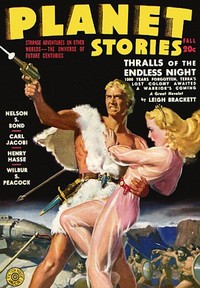
This digital edition of Assignment on Venus — Story, Setting & Ideas is described by source-level measurements including 8,144 words, 36 min estimated reading time, and 1 detected text section.
The text analysis averages about 15.6 words per sentence, while the detected sections provide another way to judge how the source is divided.
Project Gutenberg metadata also associates the work with “Science fiction,” connecting these edition facts with the source record’s subject description.
Explore this collection
These alternatives are selected using recorded categories and estimated reading time.
About 36 minutes
Space Future
8,130 recorded words. 0 minutes difference from this book's estimate.
View Gutenberg source #62619About 37 minutes
Space Future
8,465 recorded words. 1 minutes difference from this book's estimate.
View Gutenberg source #61895About 35 minutes
Space Future
7,909 recorded words. 1 minutes difference from this book's estimate.
View Gutenberg source #63477Search stored excerpts and compare books → Choose by your preferences →
Choices use stored catalog measurements. Estimates vary with reading speed. A shared category is a catalog label, not a claim that two books have the same argument or literary quality.
Search reads excerpt text stored with this catalog and links to its associated Gutenberg record. The connection is stored in the site database; this tool does not recheck that every excerpt is word-for-word identical to that external record. Excerpt search does not cover every chapter and does not verify historical publication dates.
Catalog snapshot checked: 2026-09-25. Coverage: 99 public books, 99 available source excerpts.
Read the complete public-domain text at its original source.
Read on Project GutenbergThe story opens with Lieutenant Simms paddling a jagua through Venus's Blue Mold Swamp, a setting rendered in thick indigo and white metal. The journey is measured in grueling weeks, and the destination—Half-way Jetty—promises only a pause before disgrace. Jacobi establishes tension immediately: the cylinder Simms carries holds his own dishonorable discharge, a detail that transforms a routine delivery into a personal stake. The swamp itself is a character, with its man-high rip grass, blue priest trees, and ardaleptic ferns, all rendered in precise, sensory language.
The Blue Mold Swamp is not merely a backdrop but a persistent presence that shapes the narrative. Jacobi returns to specific images: the jagua (a dugout canoe), the dehydration mask, the catwalk, and the white metal of the jetty. These details ground the reader in a tangible, hostile environment. The swamp's dangers are not abstract; they are felt through Simms's weary legs, the cramped stretch of his body, and the constant need for the mask. Later, when Simms drives a hydrocar, the landscape is again described with the same specificity: aisles of rip grass, denser groves of priest trees. This repetition of visual and tactile elements creates a cohesive sense of place that is both alien and immediate.
Jacobi structures the narrative through a series of movements: from swamp to jetty, from jetty to village, from village to hydrocar, and back into the swamp. Each transition is marked by a change in mode of transport—paddle, foot, hydrocar—and a shift in tension. The journey is never linear; Simms doubles back when he loses the cylinder, retracing his path through familiar landmarks. This back-and-forth motion mirrors his internal conflict: he is physically moving toward his goal (GHQ at BeTaba) but also retreating into the swamp to recover what he has lost. The hydrocar chase, with its sudden turns and the roar of the motor, injects a kinetic energy that contrasts with the earlier, slower paddling.
The sealed cylinder is the story's central object, and Jacobi uses it to build suspense. It is introduced in the opening summary as holding Simms's dishonorable discharge, and its loss mid-narrative triggers a frantic search. The cylinder is not just a plot device; it carries emotional weight. Simms's reaction—a cold numbness, the realization that without it he will be accused of insubordination—reveals his vulnerability. The cylinder is also a symbol of the service's judgment, a physical reminder of failure that Simms must deliver himself. When he loses it, the story shifts from external threats (Halleck, the mold gun) to internal desperation. The reader never learns the exact contents, but the cylinder's significance is clear from Simms's actions.
Jacobi's dialogue is terse and functional, often carrying exposition or threat. Halleck's lines—"We've been expecting you" and "Deleon Salts"—are delivered with deliberate calm, undercutting the danger. Simms's speech is more reactive, marked by ellipses and interruptions: "But ... but good Lord, you can't do that...." The narrative voice, however, is more descriptive, using similes like "like a frightened banshee" and "like a runaway comet." This contrast between clipped dialogue and vivid narration creates a layered texture. The story also uses technical jargon (piezo-electric crystals, supersonic range) sparingly, enough to suggest a scientific basis without overwhelming the adventure tone.
Readers should pay attention to how Jacobi balances the physical journey with Simms's internal stakes. The swamp is both obstacle and refuge, and the cylinder is both burden and goal. The story's brevity (8,144 words) means every scene serves multiple purposes: advancing the plot, deepening the setting, or revealing character. Note how the author withholds information—the cylinder's exact contents, the outcome of Simms's report—to maintain tension. This is a tight, efficient narrative that rewards attention to its structural choices.
That Jacobi story stayed with me—the weight of that sealed cylinder, the swamp closing in. It made me think about the choices we carry quietly. There's a companion piece, Venus Has Green Eyes — Reading Companion, that lingers on that same ache of divided loyalty. I found myself rereading a few lines from it late last night.
Answer a few questions and save a private reflection on this device.