About 122 minutes
The Green World — A Reader’s Guide
Other Worlds
27,976 recorded words. 18 minutes difference from this book's estimate.
View Gutenberg source #61509
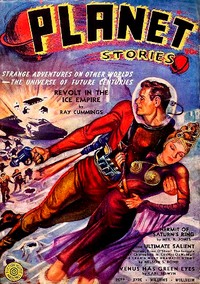
For The Ultimate Salient — Story, Setting & Ideas, the stored edition analysis reports 23,785 words, 1 hr 44 min estimated reading time, and 3 detected text sections.
The text analysis averages about 12.3 words per sentence, while the detected sections provide another way to judge how the source is divided.
Project Gutenberg metadata also associates the work with “Science fiction,” connecting these edition facts with the source record’s subject description.
Explore this collection
These alternatives are selected using recorded categories and estimated reading time.
About 122 minutes
Other Worlds
27,976 recorded words. 18 minutes difference from this book's estimate.
View Gutenberg source #61509About 86 minutes
Other Worlds
19,636 recorded words. 18 minutes difference from this book's estimate.
View Gutenberg source #62246About 74 minutes
Other Worlds
16,827 recorded words. 30 minutes difference from this book's estimate.
View Gutenberg source #62319Search stored excerpts and compare books → Choose by your preferences →
Choices use stored catalog measurements. Estimates vary with reading speed. A shared category is a catalog label, not a claim that two books have the same argument or literary quality.
Search reads excerpt text stored with this catalog and links to its associated Gutenberg record. The connection is stored in the site database; this tool does not recheck that every excerpt is word-for-word identical to that external record. Excerpt search does not cover every chapter and does not verify historical publication dates.
Catalog snapshot checked: 2026-09-25. Coverage: 99 public books, 99 available source excerpts.
Read the complete public-domain text at its original source.
Read on Project GutenbergThe story opens with a writer, Eben Clinton, mistaking his visitor for a census-taker or a salesman, only to discover that Dr. Edgar Winslow has brought a manuscript that claims to be from the future. The visitor's "ice-blue eyes" and "eager intensity" hint at something beyond the ordinary, setting up a frame narrative that questions the boundaries of fiction and reality. The excerpt immediately establishes a self-aware tone: Clinton grumbles about "strange things creep[ing] out of the cracks and crevices" of being a storyteller.
The opening pages of The Ultimate Salient introduce Eben Clinton as a somewhat sardonic narrator, a writer who is tired of unsolicited manuscripts. His initial dismissal of the visitor—offering a list of things he doesn't need, from "shoelaces" to "life insurance"—reveals a weary professionalism. The visitor, Dr. Edgar Winslow, is described as "a neat and quiet person" with a "piercingness of gaze," a detail that suggests hidden depths. The manuscript he carries is presented as something that will "prove of the greatest interest," and Clinton's reluctant invitation into his workroom sets the stage for a story-within-a-story. The narrative voice is colloquial and self-deprecating, as when Clinton admits he is "a sort of stuffed shirt" suffering from "expansion of the hatband." This framing device immediately signals that the book is as much about the act of storytelling as it is about the tale itself.
The embedded narrative jumps to July 29, 1963, describing the fall of Santa Fé in a global conflict. The battle is witnessed via "televises," a futuristic technology that broadcasts the action live—even as the enemy, the Toties, use it for propaganda. The description is visceral: "the scream of explosives was deafening, the street pictured on the metallic screen before us was a shambles of blood." The narrator notes the multinational composition of the defending army, including "French, English, Scandinavian and Canadian uniforms" and "loyal Sikhs from India." The battle's turning point comes when the televise screen goes blank, raising false hope before the broadcast resumes. This detail underscores the theme of mediated warfare and the unreliability of information. The prose is pulpy but precise, with a focus on the chaos and brutality of combat.
The catalog subject "Psychic ability — Fiction" finds its clearest expression in the frame narrative. Dr. Winslow is described as a psychologist, and the manuscript he delivers is implied to be a form of spirit writing or precognition. The opening address—"Brian O'Shea, man of the Future, here is your story"—suggests that the text is a message to a soldier yet unborn. The excerpts do not fully explain the mechanism, but the framing device creates a metafictional loop: a story about a writer receiving a story from the future, which he then presents as fiction. The subject "Science fiction — Authorship — Fiction" is directly relevant, as the narrative explicitly engages with the process of writing and receiving stories. The interplay between the skeptical Clinton and the earnest Winslow mirrors the reader's own suspension of disbelief.
Readers should pay close attention to the frame narrative's clues about the manuscript's true nature. The story's structure—a tale within a tale—invites questions about authorship and authenticity. The battle scenes, while vivid, are filtered through the lens of a writer's imagination, and the psychic elements remain tantalizingly unexplained in the provided excerpts. This is a work that rewards careful reading of its nested layers.
That rainy Sunday, I kept returning to Winslow's impossible brass buttons and O'Shea's matter-of-fact dread, until the metafiction peeled back like damp wallpaper. Later, without thinking, I reached for All That Earthly Remains — A Closer Reading, and the same quiet ache of borrowed lives lingered there, unannounced, like the smell of wet wool.
Use these questions to collect your thoughts before moving on.