About 50 minutes
Conspiracy on Callisto — A Reader’s Guide
Machines Invention
11,347 recorded words. 1 minutes difference from this book's estimate.
View Gutenberg source #62476
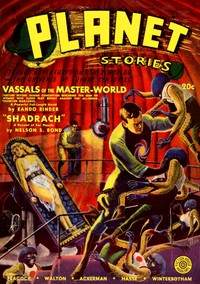
The Star of Satan — Themes and Context can be approached with a clearer sense of reading commitment from its source measurements: 11,199 words, 49 min estimated reading time, and 2 detected text sections.
The text analysis averages about 14.1 words per sentence, while the detected sections provide another way to judge how the source is divided.
Project Gutenberg metadata also associates the work with “Science fiction,” connecting these edition facts with the source record’s subject description.
Explore this collection
These alternatives are selected using recorded categories and estimated reading time.
About 50 minutes
Machines Invention
11,347 recorded words. 1 minutes difference from this book's estimate.
View Gutenberg source #62476About 47 minutes
Machines Invention
10,672 recorded words. 2 minutes difference from this book's estimate.
View Gutenberg source #63609About 45 minutes
Machines Invention
10,349 recorded words. 4 minutes difference from this book's estimate.
View Gutenberg source #61055Search stored excerpts and compare books → Choose by your preferences →
Choices use stored catalog measurements. Estimates vary with reading speed. A shared category is a catalog label, not a claim that two books have the same argument or literary quality.
Search reads excerpt text stored with this catalog and links to its associated Gutenberg record. The connection is stored in the site database; this tool does not recheck that every excerpt is word-for-word identical to that external record. Excerpt search does not cover every chapter and does not verify historical publication dates.
Catalog snapshot checked: 2026-09-25. Coverage: 99 public books, 99 available source excerpts.
Read the complete public-domain text at its original source.
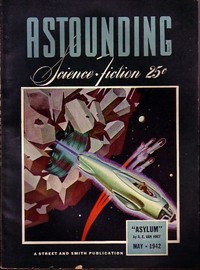
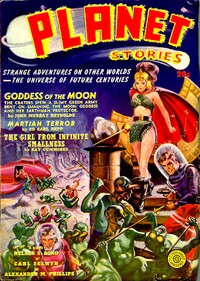
Read on Project GutenbergHenry Hasse's 1941 story opens with salvage operator Hype Garth waking moments before a message arrives, a habit he cannot explain after twenty-three years on asteroid station M3. The narrative immediately establishes a claustrophobic setting: two men isolated in a "black isolated hell of outer space," with Garth's strained attention and his partner Prokle's oblivious sleep drawing a sharp contrast. The message from Martian headquarters reports a light on an uncharted asteroid—possibly a signal from the missing lifeboat of the wrecked Martian Princess. The sender adds a sardonic tip: J. P. Chiswell, a wealthy passenger, is among the missing. This opening efficiently sets up a rescue mission tinged with greed and unease.
The story builds suspense not through action but through precise sensory cues. Garth's premonition is described as a "subconscious awareness" that "almost frightened him," and the message arrives with "crisp, crackling static" and a voice that "stabbed the darkness almost viciously." The author uses light sparingly: a "faintly glowing violet" from the receptube, then the "full glare of the fire" on the asteroid. Chiswell's appearance is rendered in harsh visual details—"gaunt face, beak-like nose, shaggy brows and tangled growth of beard"—and his movements are animalistic: he "scuttled like a huge beetle" and let out an "animal-scream of rage." These details ground the science-fiction premise in a visceral, immediate reality.
Chiswell's madness is the story's central puzzle. He speaks only five words at first—"I know what you want!"—repeated with "cunning" and "cool menace." When Garth tries to reason with him, Chiswell responds with a "profane and garbled rush of mad words" that only gradually become coherent: "it's all mine, do you hear, all mine." The narrative leaves ambiguous whether his paranoia is delusion or a rational response to a real threat. Prokle's reckless taunting—"You sound like some street-corner missionary"—and his trick to drain Chiswell's ray-gun charge add a grim humor. The reader is left to wonder what Chiswell believes he possesses and whether the salvage crew's motives are purely altruistic.
Hasse structures the story in short, punchy scenes. The opening message establishes the mission; the landing on the asteroid is implied rather than described. The middle excerpt jumps directly to the confrontation with Chiswell, with no transition. Dialogue is clipped and functional: "Whew!" / "That goes double for me." Action beats are economical: "Prokle leaped up, stood exposed in the dying fire-light. Again the ray spurted." The pacing accelerates as Chiswell's ray-gun charge dwindles, leading to a standoff. The excerpts break off just as Chiswell begins to reveal his secret, leaving the resolution—and the nature of the "star of Satan"—to the reader's discovery.
Garth and Prokle are distinguished by their reactions to isolation. Garth is introspective, his nerves "raw" after decades of partners who "come and go." Prokle is pragmatic, even flippant—he chuckles while being shot at. Their banter feels natural: "You're still a fool!" / "It's all right, all right!" The Martian sender's voice is a third character: sardonic, almost taunting, reserving "some little sardonic touch" for Garth. Chiswell's voice shifts from soft cunning to raging incoherence, his dialogue marked by repetition and fragmented syntax. These vocal contrasts create a layered soundscape in a story where visual and auditory details carry the weight of exposition.
The asteroid is described in minimal but effective strokes: "lazily spinning," "twenty miles diameter," with a cave "as high as Chiswell's head, but narrow, extending darkly back into the towering rock." The low gravity is noted only when Prokle's leap is affected. The isolation is emphasized through Garth's internal monologue: "two men were thrown together in this black isolated hell of outer space." The setting is not exotic but functional—a barren rock that becomes a stage for psychological drama. The title "The Star of Satan" hints at something more sinister than a simple rescue mission, but the excerpts leave that meaning tantalizingly unclear.
Readers should pay attention to how Hasse withholds information: the story's title is never explained in the excerpts, and Chiswell's secret is only hinted at. The narrative rewards close reading of dialogue and description—every sensory detail may be a clue. The story is short enough to be read in one sitting, and its brisk pacing makes it a good example of 1940s pulp science fiction that prioritizes atmosphere over exposition.
I keep thinking about how Hasse let the silence on M3 do all the work—that unease creeping in before anything truly wrong appears. It reminded me of a quieter companion piece, Quest on Io — Inside the Classic, which lingers on the same kind of hush, that moment when a world feels too empty to be safe. Strange how two stories can share that exact loneliness.
Your answers remain private and are stored only in this browser.