About 24 minutes
The Real Thing — Reading Notes
Machines Invention
5,309 recorded words. 2 minutes difference from this book's estimate.
View Gutenberg source #61288
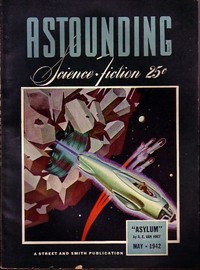
The catalog record for Forever is Not So Long — Story, Setting & Ideas provides practical reading context through 5,843 words, 26 min estimated reading time, and 1 detected text section.
The text analysis averages about 20.9 words per sentence, while the detected sections provide another way to judge how the source is divided.
Project Gutenberg metadata also associates the work with “Science fiction,” connecting these edition facts with the source record’s subject description.
Explore this collection
These alternatives are selected using recorded categories and estimated reading time.
About 24 minutes
Machines Invention
5,309 recorded words. 2 minutes difference from this book's estimate.
View Gutenberg source #61288About 30 minutes
Machines Invention
6,685 recorded words. 4 minutes difference from this book's estimate.
View Gutenberg source #61204About 34 minutes
Machines Invention
7,772 recorded words. 8 minutes difference from this book's estimate.
View Gutenberg source #61013Search stored excerpts and compare books → Choose by your preferences →
Choices use stored catalog measurements. Estimates vary with reading speed. A shared category is a catalog label, not a claim that two books have the same argument or literary quality.
Search reads excerpt text stored with this catalog and links to its associated Gutenberg record. The connection is stored in the site database; this tool does not recheck that every excerpt is word-for-word identical to that external record. Excerpt search does not cover every chapter and does not verify historical publication dates.
Catalog snapshot checked: 2026-09-25. Coverage: 99 public books, 99 available source excerpts.
Read the complete public-domain text at its original source.
Read on Project GutenbergF. Anton Reeds's "Forever Is Not So Long" opens in September 1931, with Europe's lights still burning—a phrase that immediately signals a world on the brink. The story's diction oscillates between the giddy energy of a dance floor and the cold precision of a workshop. Reeds uses contrasting sensory details: the "pulsing tom-tom beat" of American music versus the "feel of metal cold in his hands." This tension is embodied in Stephen Darville, who is torn between Jean's pull and Professor Ploving's invention. The dialogue is clipped and urgent, with Jean's playful "Confound father" giving way to a more serious plea. Reeds avoids explaining the invention outright, instead focusing on Darville's internal conflict, making the story as much about choice as about technology.
Reeds establishes the setting through rhythmic, almost musical prose. The opening paragraph describes lanterns "bobbing" across the lawn and dancers moving to a "strange new throbbing music from the Americas." The word choice—"pulsing tom-tom beat"—evokes a primal, insistent energy. This is not a passive backdrop; the dance floor becomes a character, representing the "gay abandon" of youth. The narrator notes that the older generation were the "fabulous, almost forgotten 'lost generation'" of a previous war, while the dancers are "the fortunate chosen ones" building a brave new world. This generational contrast is sharpened by the music's origin: the Americas, suggesting a cultural shift. The dance is described with physicality: "muscular dexterity" and "pressing hands in the orchard's shadow." Reeds uses the dance to embody the era's optimism, making the later intrusion of the workshop all the more jarring.
In contrast to the dance, the workshop is defined by coldness and isolation. Darville thinks of "the feel of metal cold in his hands" and "the crazy swaying of the thin needles on the control board." The language is tactile and precise, emphasizing the physical reality of the invention. The workshop is located beyond the orchard, separated from the house and the party. When Darville leaves the dance, he walks a "moonlight-flooded" path, the moonlight linking the two worlds but also highlighting their difference. The invention itself is never named; Reeds withholds technical details, focusing instead on its emotional weight. Darville's desire for "the thing that awaited him" is described as an "age-old call" of "Duty and Romance." This phrasing elevates the conflict to a universal struggle, but the specific details—the cold metal, the swaying needles—keep it grounded in the story's material world.
Reeds's dialogue reveals character through brevity and subtext. Jean's first line to Darville is a plea: "One dance together, Steve, before you go out to the workshop." Her words are direct, but her actions—taking his hands, pressing them—convey urgency. When he refuses, she erupts: "Confound father, confound you and confound science." The repetition of "confound" and the laugh that follows a "note of real annoyance" show her frustration masked by playfulness. Later, after Darville decides to stay, Jean's speech becomes effusive: "We'll be the happiest people in the world, Steve. The happiest, gayest, most in love two people in the world." The triple repetition of "happiest" and the promise of "forever" contrast with the story's title, hinting at irony. Darville's response is a single word: "Forever." The dialogue is sparse, leaving much unsaid, which heightens the emotional stakes.
The story's final exchange is a masterclass in economy. Two trumpets take "a hot chorus, unmuted, their notes sharp and high and quivering." The music, once gay, now sounds sharp and quivering—a shift in tone. Jean says, "And we'll go on being that, Steve—forever." Darville replies simply: "Forever." The word hangs in the air, its meaning ambiguous. Is it a promise or a resignation? The title, "Forever Is Not So Long," undercuts any certainty. Reeds does not reveal what happens next; the story ends on this note. The reader is left with the image of the dancers, the music, and the unspoken knowledge of what awaits—the war, the invention, the future. The brevity of the ending forces a rereading of the opening's optimism. The editorial note from the original publication in Astounding Science-Fiction (May 1942) adds another layer: readers in 1942 knew what 1931 could not foresee.
Readers should pay close attention to Reeds's use of contrast—between light and dark, sound and silence, the dance and the workshop. The story's power lies not in its science-fictional premise but in the emotional precision of its language. Every detail, from the "stiff sea breeze" to the "high-lighted sheen" of Jean's hair, serves to anchor the reader in a specific moment. The title is a warning: the word "forever" is spoken, but the story knows its fragility. Approach this as a character study in miniature, where the invention is a catalyst, not the focus.
There’s a particular ache in Forever is Not So Long—that youthful certainty brushing against the encroaching dark. It reminded me of another quiet dread I found later in The Recruit — Key Ideas to Explore, that same shadow of impending invention. I finished the note and just sat with it, feeling the weight of 1942 still pressing on my own morning.
A brief reflection can help important ideas stay with you longer.