About 37 minutes
The Expendables — Edition Insights
Machines Invention
8,303 recorded words. 0 minutes difference from this book's estimate.
View Gutenberg source #61171

For Quest on Io — Inside the Classic, the stored edition analysis reports 8,290 words, 37 min estimated reading time, and 1 detected text section.
The text analysis averages about 14.9 words per sentence, while the detected sections provide another way to judge how the source is divided.
Project Gutenberg metadata also associates the work with “Science fiction,” connecting these edition facts with the source record’s subject description.
Explore this collection
These alternatives are selected using recorded categories and estimated reading time.
About 37 minutes
Machines Invention
8,303 recorded words. 0 minutes difference from this book's estimate.
View Gutenberg source #61171About 34 minutes
Machines Invention
7,772 recorded words. 3 minutes difference from this book's estimate.
View Gutenberg source #61013About 40 minutes
Machines Invention
9,192 recorded words. 3 minutes difference from this book's estimate.
View Gutenberg source #61744Search stored excerpts and compare books → Choose by your preferences →
Choices use stored catalog measurements. Estimates vary with reading speed. A shared category is a catalog label, not a claim that two books have the same argument or literary quality.
Search reads excerpt text stored with this catalog and links to its associated Gutenberg record. The connection is stored in the site database; this tool does not recheck that every excerpt is word-for-word identical to that external record. Excerpt search does not cover every chapter and does not verify historical publication dates.
Catalog snapshot checked: 2026-09-25. Coverage: 99 public books, 99 available source excerpts.
Read the complete public-domain text at its original source.
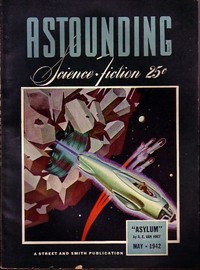
Read on Project GutenbergThe story opens with Andy Horn calling for his pet, a Ganymedian honey-bear named Oscar, against the "soft eternal moan of Io's restless winds." The exchange immediately establishes a comic, colloquial voice: Andy mutters "dern that perfidious imp of Satan" and threatens Oscar with a rock, while the bear replies with sly sass. This banter, complete with Andy's insistence on being called "Mr. Horn," sets a lighthearted tone that contrasts sharply with the bleak setting.
Williams uses the opening to layer exposition into dialogue. Andy's prospecting mission is explained through his internal monologue about a damaged spaceship and his dream of buying a private yacht. The talking bear is presented as a natural companion, not a marvel, grounding the story's fantastical elements in a matter-of-fact voice.
The narrative voice is distinctly colloquial, driven by Andy's earthy exclamations and Oscar's mimicry. Andy's speech is peppered with "dern," "flea-bitten hide," and "turkey gobbler" comparisons, giving him a folksy, frontier quality. Oscar, in turn, adopts a teasing tone—calling Andy "Bub" and later apologizing with exaggerated contrition: "Aw, Boss, put down that rock. I was only foolin'." This verbal sparring creates a rhythm that feels like a vaudeville routine.
The prose itself shifts between this informal dialogue and more detached, descriptive passages. When Andy spots the space-girl, the language becomes terse and visual: "a spot of weirdly glowing light was moving slowly along the cavern floor." The contrast between the characters' earthy speech and the eerie, unexplained phenomena heightens the story's tension. Williams does not explain the glowing light immediately; instead, he lets the reader share Andy's uncertainty.
The story moves through three distinct phases. The first is leisurely and comic, focused on Andy and Oscar's banter and the setup of the prospecting mission. The pace accelerates sharply when the space-girl Frieda appears and Andy confronts three armed men. Action becomes compressed: Andy aims his gun, Frieda stops him with a "wailing voice," and an explosion seals the cave entrance. The prose mirrors this urgency with short, punchy sentences: "Now we're fixed!" said Andy grimly. "We'll never get out."
The third phase slows again, shifting to a claustrophobic survival scene. Trapped in darkness, Andy and Frieda whisper, and the narrative dwells on sensory details—the sound of falling rock, the feel of dust, the awareness of thirst. The reappearance of Oscar as a glowing figure introduces a new mystery, but Williams withholds explanation, ending the excerpt on a note of unresolved tension. This structural arc—from comic setup to violent action to quiet suspense—gives the story a compact, efficient shape.
Io is described not just as a backdrop but as an active presence. The "soft eternal moan" of its winds recurs, and the landscape is consistently harsh: "twisted, rock-ribbed ravine," "tons of rock cascading down." The cave becomes a tomb after the explosion, with "the closing of the entrance shut off the last gleam of light." Williams emphasizes the moon's hostility through sensory details—the grating of gravel, the choking dust, the "solid stone quivered like jelly" from the blast.
This environment forces the characters into constant negotiation. Andy's prospecting is framed as a gamble against an unyielding world; the cave-in transforms the setting from a resource to a trap. The glowing Oscar, a creature native to this world, becomes an ambiguous element—potentially a rescuer or a threat. The setting thus drives both plot and mood, making Io feel like an active antagonist rather than a passive location.
Readers should pay attention to how Williams balances the story's tonal shifts. The opening's humor is not abandoned but transformed: Oscar's later appearance as a "gigantic fire-fly" echoes his earlier mischief while introducing genuine strangeness. The prose rewards close attention to word choice—Andy's "dern" versus Frieda's more formal speech, for instance—and to the way physical details (the moan of wind, the glow of light) carry emotional weight. This is a story that builds its world through small, precise observations rather than lengthy exposition.
That little honey-bear talking through the fear in that Io cave stuck with me—how warmth survives even when the walls close in. The same quiet ache lives in The Tantalus Death — Reading Companion, where loneliness feels less like a monster and more like a slow tide. I kept thinking about it afterward, the way you do with things that whisper rather than shout.
Create a short personal record of your experience with this book.