About 47 minutes
Out of This World — Themes and Context
Other Worlds
10,660 recorded words. 1 minutes difference from this book's estimate.
View Gutenberg source #62171
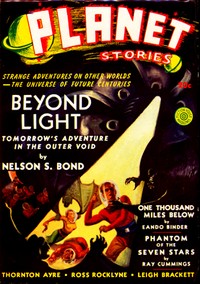
The catalog record for Beyond Light — Reading Companion provides practical reading context through 10,941 words, 48 min estimated reading time, and 2 detected text sections.
The text analysis averages about 13.0 words per sentence, while the detected sections provide another way to judge how the source is divided.
Project Gutenberg metadata also associates the work with “Science fiction,” connecting these edition facts with the source record’s subject description.
Explore this collection
These alternatives are selected using recorded categories and estimated reading time.
About 47 minutes
Other Worlds
10,660 recorded words. 1 minutes difference from this book's estimate.
View Gutenberg source #62171About 46 minutes
Other Worlds
10,434 recorded words. 2 minutes difference from this book's estimate.
View Gutenberg source #62261About 46 minutes
Other Worlds
10,393 recorded words. 2 minutes difference from this book's estimate.
View Gutenberg source #63112Search stored excerpts and compare books → Choose by your preferences →
Choices use stored catalog measurements. Estimates vary with reading speed. A shared category is a catalog label, not a claim that two books have the same argument or literary quality.
Search reads excerpt text stored with this catalog and links to its associated Gutenberg record. The connection is stored in the site database; this tool does not recheck that every excerpt is word-for-word identical to that external record. Excerpt search does not cover every chapter and does not verify historical publication dates.
Catalog snapshot checked: 2026-09-25. Coverage: 99 public books, 99 available source excerpts.
Read the complete public-domain text at its original source.
Read on Project GutenbergThe story opens with a domestic confrontation in the observation turret of the spaceship Orestes, as Captain Lane discovers his daughter Dorothy in the arms of engineer Tim Mallory. Lane’s anger is rooted in jealousy and a disdain for Mallory’s profession: he scoffs at Mallory’s title of “calorimetrical engineer” and dismisses him as a “groundhog.” This tension between spacefaring tradition and Earth-bound practicality sets the stage for a conflict that extends beyond the personal.
Once on Venus, the narrative shifts from romantic friction to survival horror. The planet’s surface is civilized, but the characters descend into a cavern realm “beyond light,” where bat-like vampires dwell. The contrast between the known, ordered system and the chaotic, monstrous underground is established early, and the excerpts suggest that the horror is both physical and psychological.
The opening argument between Captain Lane and Tim Mallory is not merely a father’s objection to a suitor; it is a clash of worldviews. Lane, a “bull-voiced” space captain, values astrogation and the romance of space travel. He calls Mallory a “money-grubbing businessman” and a “groundhog,” even though Mallory has spent years on Luna and Mars. Mallory’s retort—that he is an engineer—does little to sway Lane, who insists that only an “astrogation engineer” deserves the title.
This vocational snobbery is a recurring pattern. Lane’s contempt for “calorimetrical engineering” (the design of air-conditioning systems) reveals a hierarchy where practical, life-supporting work is deemed inferior to navigation. Yet the excerpts hint that Mallory’s skills may prove vital in the alien environment. The tension between the two men is mirrored in their physical descriptions: Mallory is “trim, hard-jawed,” while Lane is “grizzled” and “atremble with emotion.” Their conflict is personal, but it also reflects a broader theme of how different kinds of expertise are valued—and how they might be needed when facing the unknown.
When Mallory and Lane are captured and imprisoned, the narrative dwells on the physical details of their cell. The room is “low-ceilinged, square,” with walls “hewn from solid rock.” A bronze door, smaller than the city’s gateway, leads out. The most striking feature is a trough through which liquid ammonia flows, entering from one tube and exiting through another. Lane explains that the air is so ammoniated it would kill a human, yet the bat-creatures thrive in it.
This detail underscores the aliens’ otherness: they are not merely monstrous in form but physiologically incompatible with human life. The ventilation holes in the ceiling suggest a deliberate, engineered system, which Lane grudgingly admires: “These devils may be inhuman in form but they’re clever.” The city is a product of intelligence, but one that operates on principles hostile to humans. The contrast between the surface civilization of Venus and this subterranean realm is stark, and the architecture itself becomes a source of dread.
The bat-creatures are described in visceral terms: “tall, angular, covered from head to toe with a stiff, glossy pelt of fur,” with “lean and hard and predatory” faces, sharp teeth, and chiropteric wings. They are “such stuff as nightmares are made of.” Their appearance is only part of the horror; their behavior is equally unsettling. When Mallory is captured, he experiences “raking talons,” “sudden, swift and dizzy flight,” and the sound of “hungry, inhuman mirth.”
Lane labels them “vampires,” a word that carries cultural weight across planets. The story plays on this association: the creatures are not merely bat-like but evoke the vampire mythos of blood-drinking and predation. Yet the excerpts also show them as organized, with a city, a gate, and a social structure. They are not mindless beasts but a civilization—one that is utterly alien. The tension between their intelligent design and their monstrous nature is a key pattern, and it raises questions about what “civilization” truly means.
The excerpts from Beyond Light offer a glimpse of a story that balances romantic conflict with planetary horror. Readers should pay attention to how Bond uses the setting—the spaceship, the Venusian surface, and the underground city—to reflect the characters’ internal struggles. The bat-men are not simply monsters; they are a society with its own logic, and the ammonia-filled air and engineered tunnels suggest a world that operates on different biological and cultural rules. The incomplete text leaves open how Mallory’s engineering skills and Lane’s spaceman instincts will combine—or clash—in the face of this threat.
Reading about Tim Mallory’s practical hands against Lane’s pride made me think of my father’s old workshop—how he’d fix things quietly while the world argued about grander things. That same human ache surfaced when I reread The Madman From Earth — A Closer Reading last winter; both stories feel less like adventure and more like a held breath of lonely resilience.
A brief reflection can help important ideas stay with you longer.