About 31 minutes
The Girls from Fieu Dayol — Themes and Context
Other Worlds
7,051 recorded words. 0 minutes difference from this book's estimate.
View Gutenberg source #61048
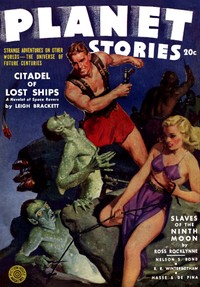
Before opening Star of Panadur — Key Ideas to Explore, the edition data offers a quick orientation: 6,916 words, 31 min estimated reading time, and 1 detected text section.
The text analysis averages about 18.3 words per sentence, while the detected sections provide another way to judge how the source is divided.
Project Gutenberg metadata also associates the work with “Science fiction,” connecting these edition facts with the source record’s subject description.
Explore this collection
These alternatives are selected using recorded categories and estimated reading time.
About 31 minutes
Other Worlds
7,051 recorded words. 0 minutes difference from this book's estimate.
View Gutenberg source #61048About 30 minutes
Other Worlds
6,712 recorded words. 1 minutes difference from this book's estimate.
View Gutenberg source #60981About 32 minutes
Other Worlds
7,135 recorded words. 1 minutes difference from this book's estimate.
View Gutenberg source #61414Search stored excerpts and compare books → Choose by your preferences →
Choices use stored catalog measurements. Estimates vary with reading speed. A shared category is a catalog label, not a claim that two books have the same argument or literary quality.
Search reads excerpt text stored with this catalog and links to its associated Gutenberg record. The connection is stored in the site database; this tool does not recheck that every excerpt is word-for-word identical to that external record. Excerpt search does not cover every chapter and does not verify historical publication dates.
Catalog snapshot checked: 2026-09-25. Coverage: 99 public books, 99 available source excerpts.
Read the complete public-domain text at its original source.
Read on Project GutenbergThe story opens on Europa, where Hugh Betancourt and Jim Brannigan are stranded after their spaceship crash-landed. The first excerpt immediately establishes a contrast in their attitudes: Jim sees the alien creature as "food," while Hugh reacts with awe at its "soft and large and luminous" eyes and "six-fingered hands." The authorial choice to describe the creature through Hugh's perspective—using words like "beautiful" and "shimmering"—signals a sympathetic viewpoint, while Jim's dialogue is blunt and utilitarian. This early divergence in diction sets up the central conflict not just between men, but between exploitation and wonder.
The authors use contrasting language to define the two protagonists. Jim Brannigan speaks in short, imperative sentences: "Don't let it get away from you," "It means food!" His vocabulary is practical, focused on immediate needs. Hugh, by contrast, uses longer, more descriptive phrases: "You've all but strangled it!" and later muses on the creature's beauty. The narrator's voice aligns with Hugh's perspective, describing the alien's "liquid sheen of silvery fur" and "beryl" eyes. This linguistic choice subtly guides reader sympathy toward Hugh, even before the plot reveals his moral stance.
When the Panadur communicates telepathically, the text shifts from spoken dialogue to italicized thought-streams: "We know you would have spared us." This formal, collective voice—using "we" and "us"—contrasts sharply with the men's individualistic speech. The authors use this technique to mark the alien as an advanced, unified intelligence. Hugh's exclamation, "Telepathy, by Mercury's molten heart!" is a rare moment of pulp-style interjection, but the Panadur's thoughts remain calm and measured. This structural choice reinforces the creature's otherworldly nature and its role as a moral arbiter.
Throughout the excerpts, light and energy are linked to life and morality. The Panadur's fur is described as "silvery" and "shimmering," and its eyes are "luminous" like "beryls." In contrast, Jim's anger is associated with redness: his face grows "redder with anger" until indistinguishable from his hair. The Panadur explains its power as "the release of electronic energy" and "pure energy from matter." This imagery reinforces the theme of life force as something precious, not to be consumed carelessly. The "star of Panadur" itself is a "dazzling gem" that channels thought, blending physical light with mental power.
Hugh's recovery from a blow to the head is narrated through fragmented memories. He recalls "scenes in his delirium" where Panadurs formed circles, one expanding as another contracted. The authors use this disoriented perspective to withhold the full truth of Jim's fate until the Panadur reveals it. The phrase "the entire meaning burst upon him" signals a moment of horrific realization. This technique—showing events through a dazed, unreliable consciousness—creates suspense and emphasizes the alien's incomprehensible power. The reader pieces together the truth alongside Hugh, making the revelation more impactful.
Readers should pay close attention to how the authors balance pulp adventure tropes—crash landings, greedy antagonists—with a more thoughtful treatment of alien intelligence. The Panadur is not a monster but a judge, and its telepathic voice carries moral weight. The story's brevity (under 7,000 words) means every descriptive choice matters; note how the setting on Europa shifts from a "hellish satellite" to a cave of "oxide crystals" as Hugh's understanding deepens.
I keep thinking about that silver-furred creature and the quiet standoff between hunger and mercy. It reminded me, somehow, of the way Cosmic Castaway lingers on solitude, not as plot but as a texture. Both stories left me pondering how we choose what deserves protection, especially when survival whispers otherwise. The companion volume feels like a gentle echo of that same ache. Cosmic Castaway — A Reader’s Guide.
Answer a few questions and save a private reflection on this device.