About 65 minutes
Down to the Worlds of Men — Story, Setting & Ideas
Other Worlds
14,730 recorded words. 1 minutes difference from this book's estimate.
View Gutenberg source #61405
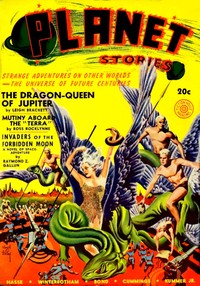
Proktols of Neptune — Themes and Context can be approached with a clearer sense of reading commitment from its source measurements: 14,547 words, 1 hr 4 min estimated reading time, and 2 detected text sections.
The text analysis averages about 12.9 words per sentence, while the detected sections provide another way to judge how the source is divided.
Project Gutenberg metadata also associates the work with “Science fiction,” connecting these edition facts with the source record’s subject description.
Explore this collection
These alternatives are selected using recorded categories and estimated reading time.
About 65 minutes
Other Worlds
14,730 recorded words. 1 minutes difference from this book's estimate.
View Gutenberg source #61405About 61 minutes
Other Worlds
14,001 recorded words. 3 minutes difference from this book's estimate.
View Gutenberg source #62349About 69 minutes
Other Worlds
15,785 recorded words. 5 minutes difference from this book's estimate.
View Gutenberg source #61978Search stored excerpts and compare books → Choose by your preferences →
Choices use stored catalog measurements. Estimates vary with reading speed. A shared category is a catalog label, not a claim that two books have the same argument or literary quality.
Search reads excerpt text stored with this catalog and links to its associated Gutenberg record. The connection is stored in the site database; this tool does not recheck that every excerpt is word-for-word identical to that external record. Excerpt search does not cover every chapter and does not verify historical publication dates.
Catalog snapshot checked: 2026-09-25. Coverage: 99 public books, 99 available source excerpts.
Read the complete public-domain text at its original source.
Read on Project GutenbergThe story opens with Commander Janus baffled by a malfunctioning Deflector needle aboard the Patrol ship Wasp. The crew discovers a derelict black spacer with a jagged hull hole, setting an ominous tone. The narrative quickly shifts from technical space-faring detail to a claustrophobic prison sequence, where the crew faces an alien race, the Proktols, and their gruesome methods. The excerpts reveal a pattern of escalating horror: a crew member named Blake, after glimpsing something through a narrow window, leaps into a crackling electrical barrier and dies. The survivors, Janus and Devries, are left to devise an escape using only what they have on hand.
The opening pages establish a tense atmosphere through technical malfunction. The Deflector needle gyrates wildly, and Janus orders the ship into a drift. The crew’s discovery of a black, unmarked derelict with a “great jagged hole” near the stern hints at violence—either a meteor collision or space cannon fire. This object, later revealed to be a Proktol vessel, is described as “solid black, preventing easy detection against the blackness of space,” a detail that underscores the Proktols’ stealth. The excerpt does not reveal what happens next, but the shift from a routine patrol to an encounter with an unknown threat is abrupt, leaving the reader to wonder how the crew ends up captured.
Later excerpts depict the crew imprisoned in a stone room with a window “far too narrow” and a doorway blocked by a “crackling sheet of electrical blueness.” The barrier is lethal: Blake, in a moment of desperation, leaps into it and is killed instantly, his body charred. The alien V’Naric controls the barrier with a key, and the prisoners are forced to watch as a fellow crew member (Ketrik) suffers a slow death below, described as having “progressed too rapidly.” The psychological pressure is palpable—Devries notes that Blake’s last words, “He’s alive, still alive,” keep hammering in his brain. The room’s bare stone walls and the constant crackling sound create a sensory prison, emphasizing helplessness.
After Blake’s death, Janus and Devries are left alone. V’Naric taunts them, saying, “I will leave you to decide between yourselves who will be next.” Devries notices a slot in the doorway and realizes they might short-circuit the barrier. But they lack a knife. Janus produces an “ancient half-dollar” he has carried as a lucky charm since his first space flight. Devries begins rubbing its edge against stone to flatten it to fit the slot. The coin’s origin—a museum piece—and Janus’s sentimental attachment contrast with the dire situation. The excerpt ends with Devries working on the coin, uncertain if it will work, leaving the reader to anticipate whether this improvised tool will succeed.
The alien V’Naric is the only Proktol named in the excerpts. He speaks calmly, expressing regret over the prisoners’ deaths as “wasteful.” He carries a flame-pistol and controls the electrical barrier with a key, suggesting a technological superiority. His words—“It will soon be over with your friend down there”—imply a systematic process of torture or execution. The Proktols themselves remain shadowy; the excerpts do not describe their appearance or motives beyond vague references to “space-rumor” about their horror. V’Naric’s demeanor—polite but menacing—adds a layer of psychological cruelty, as he leaves the prisoners to choose who dies next. This dynamic sets up a survival scenario where human ingenuity (the half-dollar) is pitted against alien technology.
Readers should pay close attention to the early technical details—the Deflector needle, the derelict’s design—as they foreshadow the Proktols’ stealth and the crew’s vulnerability. The story’s strength lies in its confined setting and the escalating tension between the prisoners and V’Naric. The half-dollar, introduced as a lucky charm, becomes a symbol of hope against overwhelming odds. The excerpts do not reveal the outcome, so the reader is left to wonder whether Devries’s plan will work or if the Proktols have further horrors in store.
That rainy afternoon, Protocols of Neptune left me thinking about how a half-dollar could ground a person through the worst kind of fear. The weight of it, the familiar edges. Later, almost without deciding, I picked up Cosmic Castaway — A Reader’s Guide, and the same quiet attention to small comforts carried me through its pages. Some books simply understand that survival is often a matter of what you can hold.
Your answers remain private and are stored only in this browser.