
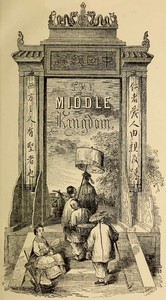
The Middle Kingdom, Volume 1 (of 2) by S. Wells Williams
Forget a single plot. 'The Middle Kingdom' is an encyclopedia with a heartbeat. Samuel Wells Williams arrived in China in 1833, a time when contact was limited and often tense. This first volume is his life's work of observation, compiled to make sense of a complex empire for an American and European audience. He organizes his findings like a dedicated scholar, but his personal voice and firsthand experiences constantly shine through.
The Story
There's no protagonist chasing a villain. Instead, Williams guides us on a tour of 19th-century China. He starts with the land itself—the geography, the climate, the plants and animals. Then he moves to the people: their history, their system of government, and the powerful role of the emperor. He spends considerable time on society and daily life, explaining everything from education and the civil service exams to marriage customs, food, and festivals. A significant portion is dedicated to language and literature, which he saw as key to understanding the Chinese mind. He also details their religions, philosophies like Confucianism, and the state of science and the arts. It's a systematic, chapter-by-chapter unveiling of a civilization.
Why You Should Read It
This isn't a dry textbook. What makes it compelling is Williams himself. You're seeing China through the eyes of a specific man of his time—a Christian missionary with clear biases, but also a genuine admirer of Chinese culture and a sharp observer. When he describes the elegance of the written language or the efficiency of the canal system, his respect is clear. When he discusses religious practices he disagrees with, his perspective is equally clear. Reading it today is a double journey: you learn about Qing Dynasty China, but you also learn about 19th-century American thought. You see the beginnings of cultural analysis, complete with its blind spots and breakthroughs. It feels less like reading a report and more like listening to a very detailed, thoughtful travelogue.
Final Verdict
This book is perfect for history buffs and nonfiction readers who enjoy primary sources. If you liked the idea of Guns, Germs, and Steel but wish it had more personal narrative, or if you're fascinated by early encounters between East and West, you'll find this incredibly rewarding. It's not a quick read; it's a slow, immersive one. Think of it as a foundational document. It won't give you modern analysis, but it will give you the raw, thoughtful, and sometimes flawed observations that helped shape that analysis. For anyone curious about China before the modern era, this is an essential and surprisingly engaging window.
This content is free to share and distribute. Thank you for supporting open literature.
James Torres
1 year agoVery interesting perspective.
Kevin Garcia
1 year agoHonestly, the content flows smoothly from one chapter to the next. This story will stay with me.


Barbara Lopez
2 years agoClear, concise, and incredibly informative.