
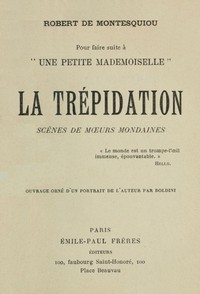
La trépidation by comte de Robert Montesquiou-Fézensac
Let's be clear from the start: if you're looking for a straightforward novel with a clear plot, this isn't it. La Trépidation is something else entirely. It's a swirling, poetic collection of thoughts, observations, and highly stylized prose from one of France's most famous dandies and aesthetes. Montesquiou was the real-life inspiration for Proust's Baron de Charlus, and that should tell you everything about the level of drama and self-regard we're dealing with.
The Story
There's no traditional narrative here. Instead, the book is built from a series of fragments, essays, and poetic flights of fancy. Montesquiou writes about everything from the symbolic meaning of flowers and jewels to his musings on art, society, and the nature of sensation itself. The title, which means "The Tremor" or "Vibration," is the key. He's chasing those fleeting, almost physical shivers of feeling that true beauty creates. We follow his mind as it darts from a critique of a painting to a memory of a sunset to a philosophical rant about modern ugliness. The only constant character is Montesquiou's own towering, meticulously crafted persona.
Why You Should Read It
I picked this up out of historical curiosity but stayed for the voice. It's hypnotic. You're not just reading sentences; you're being subjected to a worldview. It's arrogant, often ridiculous, but undeniably brilliant in spots. He finds connections between things no one else would see. Reading him describe the 'soul' of a piece of furniture or the 'melancholy' of a specific shade of blue is a trip. It’s like watching a master performer who absolutely believes his own act. You'll roll your eyes one paragraph and be stunned by a piercingly beautiful insight the next. It captures the absolute peak of a certain kind of artistic decadence that vanished with World War I.
Final Verdict
This book is a niche treasure. It's perfect for lovers of literary history, the Belle Époque, or anyone fascinated by larger-than-life personalities. If you enjoyed the aesthetic sections of Oscar Wilde or want to understand the atmosphere that bred Proust, this is an essential, primary-source dive into that world. Approach it not as a story, but as a museum visit to a spectacularly ornate mind. Just be prepared for the guide to talk about himself the entire time.
This is a copyright-free edition. Preserving history for future generations.
James Davis
11 months agoThe author provides a very nuanced critique of current methodologies.
Susan Gonzalez
2 years agoAfter a thorough walkthrough of the table of contents, the way it handles controversial points with balance is quite professional. A refreshing and intellectually stimulating read.
Susan Williams
7 months agoI took detailed notes while reading through the chapters and the logic behind each conclusion is easy to follow and verify. I appreciate the effort that went into this curation.
David Thomas
8 months agoThe information is current and very relevant to today's needs.






Karen Perez
6 months agoAfter a thorough walkthrough of the table of contents, the objective evaluation of the pros and cons is very refreshing. Well worth the time invested in reading it.